· yemen
Qishr: A Tea Made from Coffee
When Yemeni farmers process coffee, the husks don't get thrown out. They get steeped into a slightly sweet tea that tastes like nothing else.
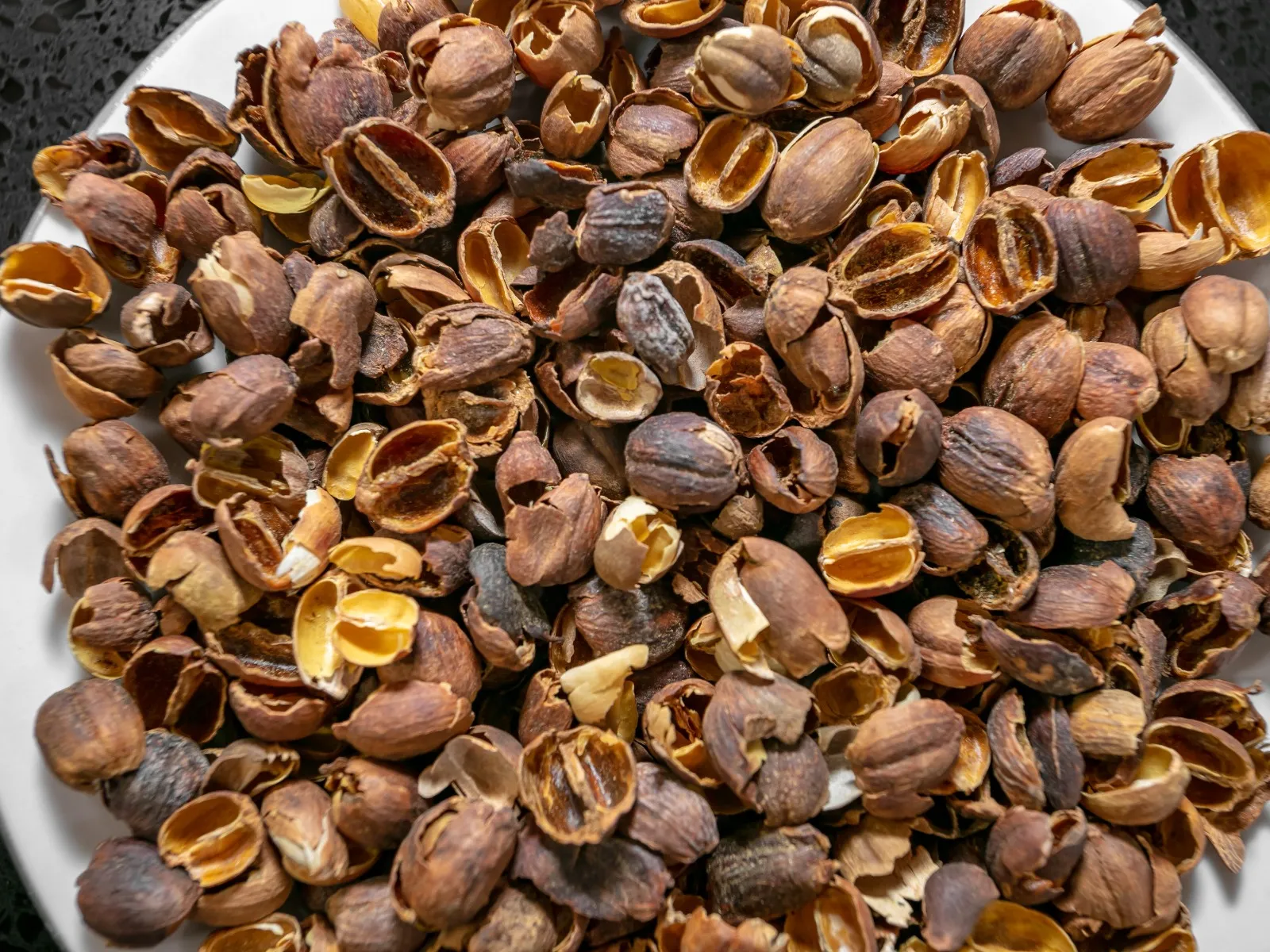
Coffee processing produces waste. The bean — the part that gets roasted and brewed — is the seed inside a fruit that looks something like a cherry. Once you extract the seed, you are left with the skin, the pulp, and the dried husk. In most coffee-producing countries, that material is composted, used for cattle feed, or simply discarded.
Yemen does something else with it.
The unbroken tradition
In the highlands above the old Port of Mokha, farmers have been processing coffee the same way for roughly five hundred years. The fruit is picked by hand. It is laid out to dry on the flat roofs of stone houses, in the sun, for several weeks. When the fruit is fully dry, the husks are split open with millstones, and the beans are winnowed and cleaned by hand.
The husks at this stage are dry, brown, and faintly sweet. Yemeni households keep them. They steep them in hot water, often with cardamom or ginger, and the result is Qishr — a thin, amber-colored drink that is closer to tea than to coffee.
It sits in a small but real category: drinks made from the parts of coffee that aren’t the bean.
What it tastes like
Qishr is genuinely difficult to describe in coffee or tea vocabulary, because it is neither.
It is lower in caffeine than brewed coffee, but not caffeine-free. It tastes faintly of dried fruit — apricot, raisin, sometimes a hint of fig. Cardamom and ginger, when added, give it a warmth that is closer to chai than to anything in the espresso family. It is naturally a little sweet, even without sugar, because the husks retain residual fructose from the fruit pulp.
The honest description is the one Yemenis themselves use: Qishr tastes like Qishr.
How we serve it
We brew Qishr fresh at the cafe. Our version is steeped slowly with cardamom — the way it is most often served in Yemeni homes — and finished with a small amount of cane sugar. It is served hot, in a small glass. It pairs surprisingly well with most of our pastries, and it is a good caffeine option for late afternoons when a full coffee feels like too much.
If you have only ever had black coffee or chai latte, Qishr will not slot neatly into either category in your head. That is the point.
It is a drink older than coffee shops, older than chocolate mochas, older than the European coffee trade. And it is on our menu in Tucker, Georgia.
Stop in and try a glass. We will explain it again, in person, in less time than it took to read this.